Common Garage Door Issues and How Experts Fix Them
You hit the button on your remote, expecting the familiar hum of your garage door opening. Instead, you hear a loud grinding noise, or worse, nothing at all. When your garage door stops working, it disrupts your routine and compromises your home security.
Understanding what goes wrong can save you a massive headache and the need for urgent Garage Door Repair. Many homeowners ignore small quirks until the door completely jams or crashes down. By knowing what to look out for, you can call for help before a minor issue becomes a major emergency.
We will walk you through the most frequent garage door problems you might face. You will learn how to spot broken springs, misaligned tracks, and malfunctioning openers. More importantly, we will show you exactly how professional technicians at Boca Raton FL Garage Door Repair Services diagnose and fix these issues safely and efficiently.
The Heavy Lifters: Broken Springs
Your garage door springs do the heavy lifting. Whether you have torsion springs mounted above the door or extension springs along the sides, they hold massive amounts of tension. This tension counterbalances the weight of the door, allowing the motor to lift it easily. Springs have a limited lifespan, usually rated for around 10,000 to 20,000 cycles. Eventually, metal fatigue sets in, and they snap.
Spotting the Early Warning Signs
You can often tell a spring is failing before it breaks completely. If your door feels unusually heavy when you try to lift it manually, the springs are likely losing their tension. You might also notice the door closing much faster than normal or refusing to open more than a few inches. If a spring actually snaps while you are home, you will hear a sound like a loud gunshot coming from the garage.
How Professionals Handle Spring Replacement
Never attempt to replace a garage door spring yourself. The stored tension can cause severe injury if the spring slips during installation. When you call an expert, they start by safely securing the door in the down position. They use specialized winding bars to carefully unwind any remaining tension from the unbroken spring.
Technicians will almost always replace both springs at the same time, even if only one broke. Because both springs endure the same amount of wear, the second one is usually close to failing. After installing the new springs, the technician balances the door. They test the tension by lifting the door halfway; if it stays in place without falling or flying up, the springs are perfectly calibrated.
Off the Rails: Misaligned or Damaged Tracks
Your garage door glides along metal tracks on either side of the opening. These tracks must perfectly align for the door to move smoothly. If a track gets bumped by a car bumper, a heavy trash can, or simply loosens over time, the door will struggle to operate. Misaligned tracks can cause the door to bind, jam, or even completely derail.
Recognizing Track Trouble Before It Worsens
Listen closely as your door opens and closes. A grinding or scraping metal sound usually indicates the door is rubbing against the track. You might also see gaps between the rollers and the track, or notice the door moving at an angle. Look for visible dents, crimps, or loose screws on the track brackets attached to your garage walls.
The Expert Alignment Process
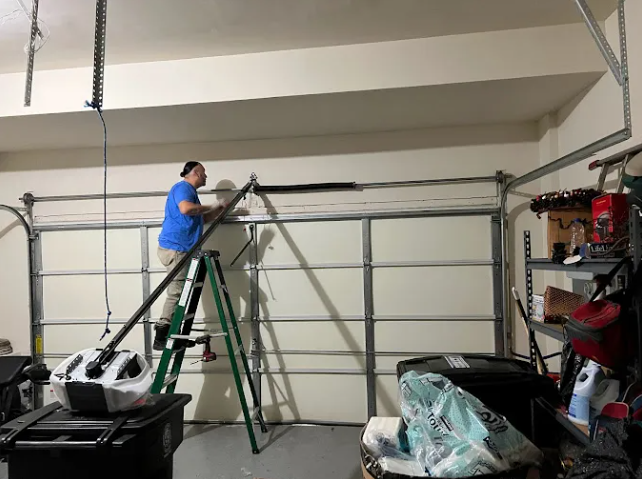
When a technician arrives to fix a track issue, they first inspect the entire length of the metal rails. If the track is simply loose, they loosen the mounting bolts, tap the track back into perfect vertical alignment using a level, and tighten everything securely.
If the track is bent, the technician will evaluate the damage. They can often hammer out minor bends using a rubber mallet to restore the smooth path. However, if the structural integrity of the metal is compromised, they will cut out the damaged section or replace the entire track system. They always finish by lubricating the tracks and testing the door to ensure a friction-free glide.
The Brains of the Operation: Malfunctioning Openers
The motorized opener is the brain of your garage door system. It receives the signal from your remote and sets the mechanical parts in motion. Openers contain complex circuit boards, drive gears, and limit switches. When the opener malfunctions, your door might refuse to open, reverse direction randomly, or operate on its own.
Symptoms of a Failing Garage Door Opener
The most obvious sign of an opener issue is an unresponsive door. You press the wall switch or remote, and nothing happens. Sometimes, you might hear the motor humming, but the chain or belt does not move. Another common issue is the door closing halfway and immediately reversing back up. This often points to a problem with the safety sensors or the internal force settings.
Professional Diagnosis and Repair Strategies
Expert technicians approach opener problems systematically. If the motor hums but the door stays put, they check the drive gears. Plastic gears inside the opener can strip over time, requiring the technician to dismantle the unit and replace the gear sprocket assembly.
If the door reverses for no reason, technicians inspect the photo-eye sensors located near the floor. They clean the lenses, check for wiring faults, and perfectly align the sensors to ensure the invisible beam connects. Technicians also recalibrate the opener’s travel limits and force settings. This tells the motor exactly how far to push the door down and how hard to pull it up, preventing unnecessary wear on the system.
Call us Here
Hours of Operation
Sun 7:00AM – 11:00PM
Mon 7:00AM – 11:00PM
Tue 7:00AM – 11:00PM
Wed 7:00AM – 11:00PM
Thur 7:00AM – 11:00PM
Fri 7:00AM – 11:00PM
Sat 7:00AM – 11:00PM
RECENT POST
Garage Door Repair Myths That Could Cost You Big
Garage Door Repair Myths That Could Cost You Big You press the button on your
How Weather Can Affect Your Garage Door and When to Repair It
How Weather Can Affect Your Garage Door and When to Repair It Your garage door
The Importance of Hiring Certified Technicians for Garage Door Repairs
The Importance of Hiring Certified Technicians for Garage Door Repairs Your garage door is the
Common Garage Door Issues and How Experts Fix Them
Common Garage Door Issues and How Experts Fix Them You hit the button on your
Why Timely Garage Door Repairs Save You Money
Why Timely Garage Door Repairs Save You Money Your garage door serves as a primary
When to Call a Pro for Garage Door Opener Repairs
When to Call a Pro for Garage Door Opener Repairs A functioning garage door brings
Expert Insights on Garage Door Opener Repair Solutions
Expert Insights on Garage Door Opener Repair Solutions A smoothly functioning overhead door provides unparalleled
Avoid Costly Breakdowns with Timely Garage Door Opener Repairs
Avoid Costly Breakdowns with Timely Garage Door Opener Repairs Your overhead door serves as a